17 April 2014 – 11.55 pm
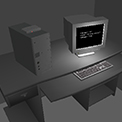
Waiting before the chat room door is a speculation and an interactive installation revolving around chat rooms and their teenage users in the late Nineties and early Two-thousands. It aims at showing that such things as digital places existed (and still exist), and that the divide between physical and digital places is sometimes a matter of intensity, not quality. [Read More]
16 April 2014 – 5.42 pm

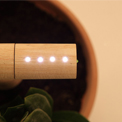
Life Link is a monitoring equipment set. It is aimed to monitor the elderly user’s physical conditions, and to warn his child whether an emergency arises; meanwhile also reminds the children to frequently contact their beloved parent.[more]
31 March 2014 – 4.16 pm
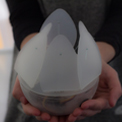 farAway is a system to strengthen relations between parents and adolescent children who have to face a divorce. It provides the possibility of sharing simple emotions and feelings, creating intimacy through non- verbal communication. farAway supports the important relationship of a child and his or her absent parent, maintaining the presence of each in the other’s life. [more]
29 March 2014 – 1.10 pm
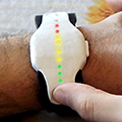 Pinch is a system for chronic pain management, composed of an interactive bracelet, a docking base for recharging and synchronising, and an online application. The bracelet allows a patient to record the pain level through the day, whenever and wherever is needed, together with pulse rate, drug consumption, physical activity level and quality of sleep. [more]
29 April 2013 – 4.05 pm
A on Mars is a system composed of three devices, designed to assist the therapeutic activity of autistic children or with social cognition disorders. The system follows the child in everyday life, helping him or her to understand facial expressions of the people with whom it interacts. During therapy it supports the therapist as a tool to arouse children’s empathy.[More]
28 April 2013 – 6.02 pm
Cooking Naturally aims to change people’s use of food resources, reducing waste by creating a direct channel between people and the information cloud surrounding the theme. All, a kitchen device to better exploit this information, is both a display appliance and a filter, adapting its behaviour to the user’s habits. [More]
27 April 2013 – 9.49 pm
Communio aims to restore contact between old and young people through an exchange of help in a system of voluntary work: an exchange of information and lessons for the mutual benefit and enrichment of old and young. Older people provide the skills and experience of work accumulated over their lifetimes, while young people provide a link with development and technological innovation.[More]
14 April 2013 – 7.02 pm
Footprints is a network of interactive objects for creating and sharing illustrated stories between parents and children. The project’s aim is to involve parents into their children’s everyday lives, by sharing an intimate moment like telling a story. Footprints is especially conceived for modern working parents, often busy, who are away from family life and find it difficult to follow their children’s growth and development. [More]
13 April 2013 – 12.41 pm
Lexis il mostro is an interactive game for dyslexic children which aims to support the processes of reading, memorizing and association in a kinestethic, ludic and amusing way.
It is designed for Sifteo Cubes, a new game platform with mini-screen and proximity sensors, that allows the rise of a new experience.
[More]
17 March 2012 – 6.24 pm
Dibble is a service that allows the exchange of time, employment and knowledge between generations, through the use of traditional tools with new interactive behaviour. Dibble was created to help lonely elderly people with health problems to cultivate a plot in a vegetable garden. [More]
20 October 2011 – 8.10 pm
Aura is a set of wearable devices for expecting couples: a dress and a bracelet. It lets them explore the limits in communication, privacy and intimacy in a tangible way [More].
6 August 2011 – 10.40 am
Pigmento is an interactive table which allow kids to play and learn about the subtractive color synthesis. Over the surface there is white coarse salt, videoprojected from the bottom. The plane is divided in two concentric parts: primary colors at the borders and derivates in the centre. According to the amount of moved colors from the borders, it is possible to get all derivates, and to get back anytime. [More]
3 August 2011 – 12.36 pm
I Mirabilia (“The Wonders”) are a family of three interactive dolls, Odo, Lucio and Tello, for hospitalized children. Each doll takes care of a specific psychological need such as guilt, solitude and shyness and through different interactions and behaviours they allow children to improve their relationships in hospital with other people, like doctors, psychologists and similarly hospitalized children. [More]
4 July 2011 – 6.37 pm
Briciole (Italian word for ‘crumbs’) aims to make children more aware of nutrition and related issues. An interactive tabletop, a tangible user interface, allows them to play and learn about food. Several mini-games let children have fun with their friends while testing what they know and maybe learning something new. Tangibility makes the interaction stronger and involves participants in a more personal way. [More]
3 May 2010 – 7.16 pm
Performair is an audio-visual interactive installation which ‘misuses’ traditional office devices—printers, modems, scanners etc.— to play together as elements of an unconventional orchestra. Performair aims to awake the everyday user from a state of cerebral numbness caused by the present proliferation of technological devices. By reappraising traditional devices, new ways of auditory and visual communication can be explored.
3 May 2010 – 11.39 am
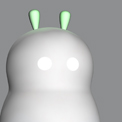 The human body is rich source of expendable energy. Through their moods and behaviours the Famfizzys show children the energy they produce as they walk. The child must take care of his Famfizzy puppet in order to keep it alive and healthy. While looking after it he keeps track of his bodily activity day by day. He appreciates energy and its costs. The aim is to give a visualization of electricity. [More]
3 May 2010 – 11.20 am
 Heart Lift is a telemonitoring system for heart patients who want to practise physical activities in the mountains. It could be an important help in the rehabilitation process, since its aim is to reassure the user and to teach him a more constructive approach to the data that comes from the monitoring devices. A headset and glove communicate the skier’s situation in a clear and unambiguous way. [More]
3 May 2010 – 11.01 am
 Performair is an audio-visual interactive installation which ‘misuses’ traditional office devices – printers, modems, scanners etc. – originally designed for other functions, to play together as elements of an unconventional orchestra. A classical orchestra performs a piece from a score—a text. Performair’s texts enable devices to play like musical instruments. [More]
19 May 2009 – 12.02 pm
 The aim of Laundrym is to make an ecological and useful service both attractive and convenient. The project concerns both a mobile phone service that allows people to reserve and monitor machines and to contact their friends to arrange to socialise while their laundry is being done, as well as the design of a simple interface (using RFID technology) for a highly complex washing machine. [More]
19 May 2009 – 11.51 am
 OTTO allows the manipulation of audio samples in real time by means of a strong physical interaction, supported by clear visual feedback. The controls use the electronic music technique called Beat Slicing—cutting a rhythmic audio sample into little pieces which can then be rearranged in different ways to change the flow of the beat and create rhythmic sections which unfold during the performance. [More]
19 May 2009 – 11.50 am
 Speaking skin researched the relationship between contemporary architecture and interaction design. The aim of the work is to demonstrate how, and with what technologies, an architectural envelope could be interactive. The thesis distinguishes between three levels of activity: passive, in which the facade changes independently of the viewer; reactive, where the facade reacts to an outside stimulus, such as the weather; and interactive: a mutual exchange of information between the viewer and the facade. [More]